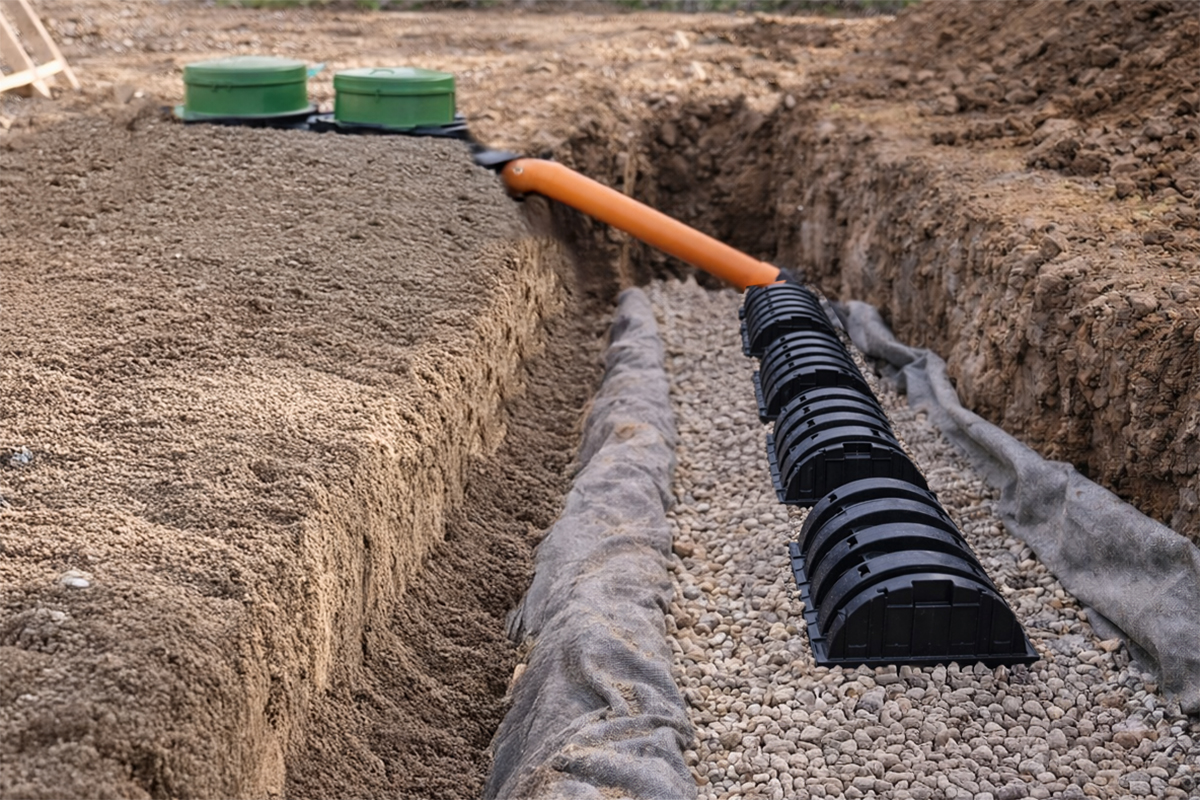
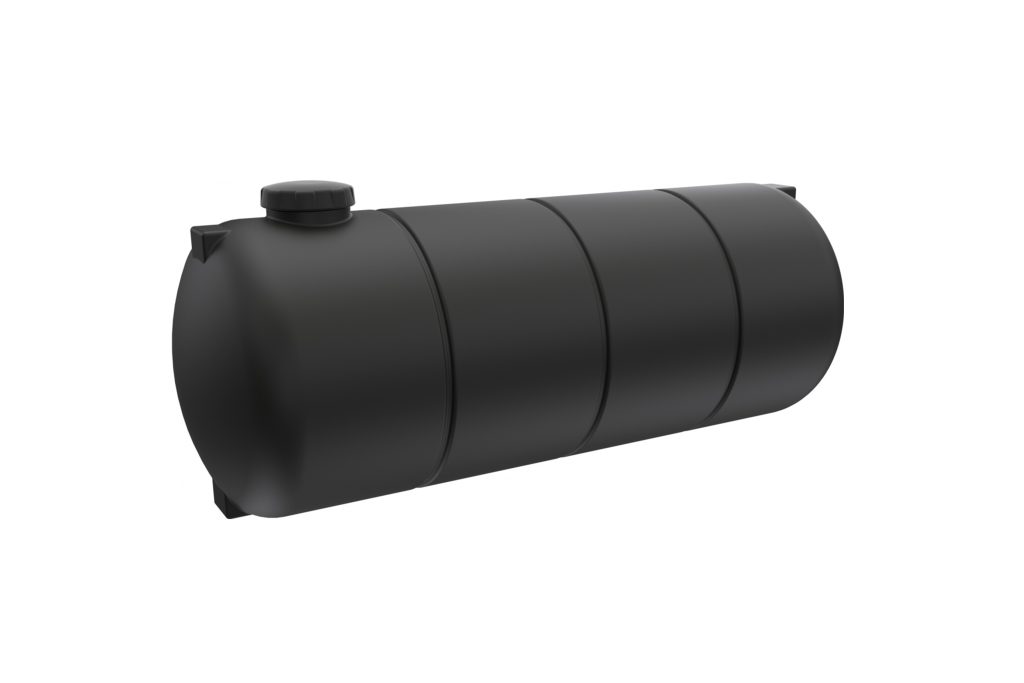
Septic tank drainage is the system that distributes partially treated water and lets it gradually soak into the soil. It is usually made of perforated pipes laid in a layer of gravel or sand, so that the water is spread evenly into the surrounding soil.
The role of drainage is to let the soil take up the water remaining after settling in the septic tank, without causing surface pooling or unpleasant odours.
Correctly sized drainage helps to:
- keep the septic system working steadily
- avoid clogging and soil saturation
- prevent uncontrolled leakage
- extend the life of the installation
In practice, not every site allows drainage. The right choice depends mainly on the soil type and site conditions.
For complete installation, drainage and groundwork solutions, see the page 👉 ECOFOSA services – https://ecofosa.ro/servicii/
What is septic tank drainage and what does it do?
Drainage is a continuation of the septic tank, not an optional component in every situation.
It allows:
- water to soak gradually into the soil
- natural aeration of the area
- normal domestic wastewater flows to be absorbed
Drainage only works on ground that can absorb water at a suitable rate.
When septic tank drainage is used
When drainage is recommended
Drainage is suitable in the following conditions:
- permeable soil (sandy or loamy)
- no high water table
- stable ground without excess water
- normal household use
In these cases, the soil gradually takes up the water and it is discharged naturally.
When drainage is NOT recommended
Drainage is not advisable when:
- the soil is clay or very compact
- the water table is close to the surface
- the ground retains water
- the area is prone to seasonal flooding
- the available space is limited
In such situations, drainage:
- can clog quickly
- can push water up to the surface
- can cause odours and backflow
In these cases, the recommended option is a system without drainage, i.e. a holding tank.
Types of septic tank drainage
Perforated pipe drainage
This is the most common solution.
Includes:
- drainage trench
- perforated pipe
- gravel layer
- optional geotextile
It is effective for permeable soils and normal flows.
Gravel bed drainage
Used where the soil allows infiltration but the water flow needs wider dispersal.
The advantages are:
- a larger contact area
- even water distribution
- lower risk of sudden saturation
Sand bed drainage
Used in mixed or transitional soils.
It provides:
- additional filtration
- controlled dispersal of water
- less pressure on the soil
How soil type affects drainage
Sandy soil
✔ very good absorption
✔ drainage recommended
Loamy soil
✔ works, but needs correct sizing
✔ technical assessment recommended
Clay soil
❌ drainage NOT recommended
Why:
- the soil does not absorb water quickly enough
- saturation and clogging occur
- the risk of backflow increases
In these cases, the right solution is a holding tank.
The risks of incorrectly sized drainage
Incorrect drainage can lead to:
- premature clogging of the system
- odours
- water backing up to the surface
- soil contamination
- leaks into foundations or the yard
The most common mistakes are:
- drainage that is too short
- too thin a gravel layer
- pipes without the correct fall
- drainage installed in unsuitable soil
- no assessment of the site
Explore our products:
-
26.500,00 RON Original price was: 26.500,00 lei.21.500,00 RONCurrent price is: 21.500,00 lei.
-
38.500,00 RON Original price was: 38.500,00 lei.35.490,00 RONCurrent price is: 35.490,00 lei.
-
41.990,00 RON Original price was: 41.990,00 lei.40.890,00 RONCurrent price is: 40.890,00 lei.
-
The alternative to drainage – a holding tank
It is recommended when:
- the soil is clay
- the ground is saturated
- the water table is high
- there is no space for drainage
Advantages:
- minimal risk of leaks
- stable operation
- full control over discharge
It needs:
- a regular emptying schedule
- monitoring of the volume used
It is the safest option on difficult ground.
How much does septic tank drainage cost?
The cost depends on:
- the length of the drainage run
- the amount of gravel and materials
- the soil type
- machinery access
- the expected volume of use
The final price is set after a site assessment.
When to call in specialists
A technical assessment is recommended when:
- you do not know the soil type
- the ground is unstable or difficult
- water stands on the surface after rain
- the system will be used intensively
- you want a long-term solution
Correctly sized drainage is essential for safety and performance.